What Does “Vehicle Reconditioned” Mean on a Carfax Report?
It's a service record, not a damage report or a title brand. Here's what the line tells a buyer, what it leaves out, and how dealers can make the work behind it count.
By Dye It Rite Inc. 5 min read

In this article
“Vehicle reconditioned” on a Carfax report is a service record. It means a dealer or service facility reported get-ready work on the car: the inspection, repairs, cosmetic fixes and detailing that make a used vehicle ready to sell. It is not an accident report, a damage report or a title brand, and on its own it is neither good news nor bad news.
What the line doesn’t tell you is what was done. That depends on the shop that reported it, and on many reports the line stands alone. Here’s how to read it, how it compares with the entries that do signal trouble, and what it means if you’re the dealer whose name sits next to it.
How “vehicle reconditioned” compares with other Carfax entries
Most of the confusion comes from reading every line on a vehicle history report as a warning. They aren’t. This is how the reconditioning record sits next to the entries shoppers see most often.
| Carfax entry | What it means | Red flag? |
|---|---|---|
| Vehicle reconditioned | A dealer or service facility reported get-ready work on the car | No. Ask what was done |
| Vehicle washed/detailed | Cleaning and appearance work | No |
| Pre-delivery inspection completed | A dealer inspected the car before handing it to a buyer | No |
| Minor damage reported | Damage was reported that Carfax’s own glossary describes as generally cosmetic, such as dents or scratches, and that “may only require reconditioning” | Worth a look. Check that it was repaired well |
| Accident reported | Someone reported a collision involving the car | Depends on how severe it was and how it was repaired |
| Structural damage reported | Damage to the car’s frame or structure was reported | Yes. Get an independent inspection |
| Salvage, rebuilt, flood or lemon title | A state branded the car’s title | Yes. The brand stays with the title for life |
Where the line comes from
Carfax says its reports draw on “billions of records from more than 151,000 domestic and international sources,” and that its products are “based only on information supplied to CARFAX.” Motor vehicle agencies, insurers, auctions, police departments and repair shops all feed that database. Service records come from the facilities that choose to share them.
That is why the wording varies so much from car to car. Carfax Canada’s help center says the level of detail on a report “will vary as it is dependent on the service records that each service facility shares.” One shop sends every line on the repair order, and the report lists tires rotated, oil changed and a safety inspection. Another sends a summary, and the report shows a single line. In one report we reviewed, a service facility entry from 2018 reads “Vehicle reconditioned” and nothing else.
Carfax itself treats this kind of work as a normal step before a sale. On a dealer record that listed “Vehicle serviced” and “Vehicle washed/detailed,” another report we reviewed added the note: “Looks like this dealer serviced the car in order to prepare it for sale. That’s a good thing!”
What reconditioning usually includes
Every dealership sets its own standard, but most used car reconditioning follows the same order:
- Inspection. A technician checks safety and mechanical items and writes up what the car needs.
- Mechanical work. Brakes, tires, fluids, batteries and any open recalls.
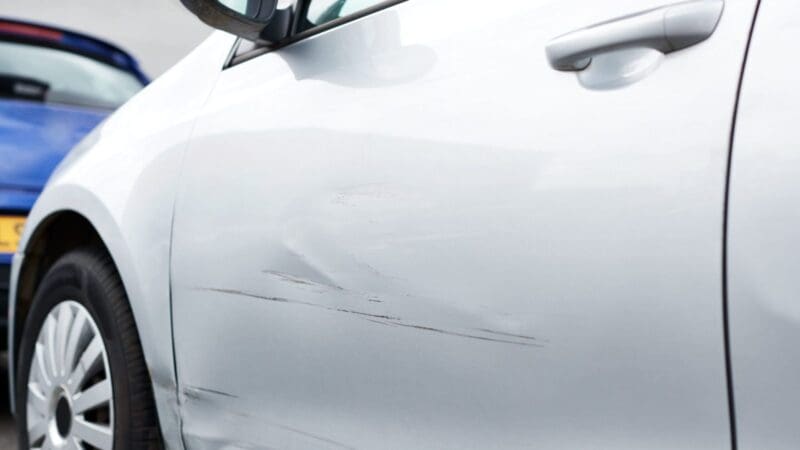
- Cosmetic repair. Interior damage like burns, tears and worn bolsters, curb-rashed wheels, windshield chips, cloudy headlights, and bumper scuffs and paint chips.
- Detailing. A deep clean inside and out so the car photographs well and shows well on the lot.

A “vehicle reconditioned” record can cover any mix of those steps. The report won’t say which, which is why the paperwork behind it matters.
What “vehicle reconditioned” does not mean
- It isn’t a title brand. Salvage, rebuilt, flood and lemon brands are put on the title by a state and follow the car for life. A reconditioning record is a service entry like an oil change.
- It isn’t an accident record. Damage and accidents show up as their own entries. Reconditioning may be how earlier cosmetic damage was fixed, so it’s worth reading the two together.
- It isn’t a certification. Certified pre-owned programs follow a manufacturer’s inspection checklist and come with warranty coverage. “Reconditioned” carries no standard of its own.
- It isn’t the full story. Carfax says plainly that it “does not have the complete history of every vehicle.” Work a shop never reported won’t appear at all.
Is a reconditioned car a safe buy?
Usually, yes. Reconditioning is a routine step for used cars sold at retail, whether or not it shows up on the report. The record is a reason to ask questions, not a reason to walk away. Three are worth asking:
- What was done? Ask the dealer for the repair order or recon sheet. A dealer that did the work properly can show you.
- Does it line up with a damage entry? A reconditioning record soon after a minor damage report often means the damage was repaired. Look closely at that part of the car.
- Was the work done well? Look for touch-up paint that doesn’t match, wheels with uneven finishes, and seat repairs that stand out from the material around them.
What the line means for dealers

Shoppers read vehicle history reports before they call. When the report says a car was reconditioned, they expect the car to look like it: clear glass and headlights, wheels without curb rash, and an interior without burns or cracked leather. If the car on the lot doesn’t match the record, the line works against you in the showroom and in the online listing.
A few habits keep the record and the car in agreement:
- Finish cosmetic work before photos. Listing photos are the first inspection most shoppers do, and wheels, headlights and seats show up clearly in them.
- Keep a recon sheet for every unit. When a shopper asks what “reconditioned” meant on this car, a line-by-line answer (two wheels refinished, driver’s bolster repaired, windshield chip filled) settles the question.
- Hold every repair to the same standard. A spot repair should disappear on the lot and in photos. One that shows costs more in shopper trust than it saved.
- Keep units moving. Every day a car waits for a sublet trip is a day it can’t be sold.
Dye It Rite handles the cosmetic side of reconditioning on the dealership lot: interior repair, wheels, windshield chips, headlights and minor paint, done by full-time, trained technicians for more than 300 dealerships across six states. See how our dealership reconditioning program works.
Frequently asked questions
Does “vehicle reconditioned” mean the car was in an accident?
No. It records get-ready work. A collision would appear as a separate accident or damage entry on the report.
Is a reconditioned car the same as a rebuilt car?
No. “Rebuilt” is a title brand a state puts on a car that was declared a total loss and later repaired. “Reconditioned” is a service record and says nothing about the title.
Can a dealer remove a reconditioning record from Carfax?
Not through Carfax. Carfax Canada, for one, says it can’t add or revise service records because they belong to the facilities that reported them.
Does reconditioning lower a car’s value?
No. Reconditioning is how a used car is brought up to retail condition. What affects value is the damage that made the work necessary, and how well that work was done.
For a shopper, “vehicle reconditioned” is a prompt to ask what was done. For a dealer, it’s a promise the car on the lot has to keep.

About Dye It Rite Inc.
Family owned since 1984, Dye It Rite repairs interiors, wheels, glass, headlights and minor paint for 300+ dealerships across Pennsylvania, Maryland, Virginia, West Virginia, Delaware and New Jersey. Every repair is done on the lot by a full-time, trained technician. More about us